

Food preparation and consumption are a series of mechanical and chemical changes based on the following basic components that you should know to optimize your nutrition:
• What nutrients are available in a given vegetable?
• How well can those nutrients be absorbed into your body based on how the vegetable
is prepared?
With these two basic concepts in mind, here are some ways to boost the nutritional content from your food:
Eat Local
There is a big trend to eat local and to support your local farmers. Eating local also helps reduce transportation and energy costs in bringing the produce to market, which often comes from as far away as California or even South America. Eating local also means plucking your produce right from the plant, consuming your produce within a reasonable amount of time (usually 72 hours after the picking). The less time from picking to consumption minimizes the amount of nutrient loss.

Storage
Related to eating local, the longer you store your fruits and vegetables, the more nutrients are lost due to heat, light, and oxygen. Storage also has an impact on accessibility: if you store your fruits and vegetables in a location where you are more likely to see them, then you are more likely to eat them. According to the US Food and Drug Administration, herbs should be chopped and frozen with water, vegetables should fare well in the refrigerator, and root vegetables and fruits should be stored at room temperature away from light.

Food Preparation: blend, crush, soak, or chop
Whether you are preparing fruits and vegetables for raw consumption or for cooking, taking extra steps can help release more nutrients, such as removing the fibrous exterior of carrots, or releasing enzymes in chopped onion or crushed garlic that form other compounds to protect against disease, or soaking grains and beans to increase the absorption of minerals like iron, magnesium, zinc, and calcium.

Raw Consumption
Any vegetables high in water soluble or heat-sensitive nutrients are best consumed raw, such as peas, Brussel sprouts, bell peppers, and spinach.

Blanching, Steaming, Microwaving, Boiling
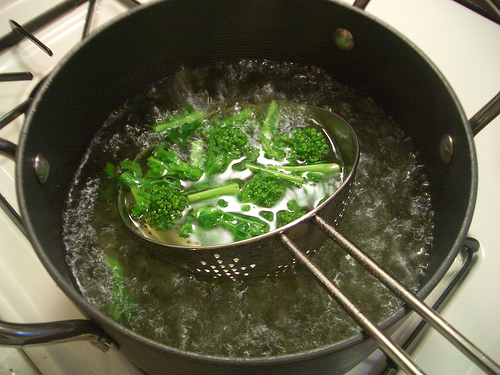
If you still want to cook vegetables with high water content, using as little extra water as possible will maximize the nutrients through these methods. A 2000 Spanish study evaluated 20 vegetables for their antioxidants through several cooking methods, with the conclusion that water is not an ideal asset in nutrient region in vegetable cooking, unless the water is also consumed.

Sauteeing, Roasting, Griddling, Frying
Some vegetables have high amounts of fat-soluble nutrients. Alternative cooking methods with healthy fats like extra-virgin olive oil make fat-soluble vitamins more absorbable.

Food Pairing
Some vegetables can be paired with other foods containing similar nutrients that assist each other in absorption into the body. Minerals like iron and zinc in beef or oysters chemically bind well with ingredients high in sulfur like garlic and onions.
Some vegetable consumption in any form is better than nothing. While cooking a vegetable can reduce its overall volume, it may also help you to increase your serving size and therefore increase your overall vegetable consumption. Each vegetable also has a variety of nutrients as well as a best cooking method to release those vitamins and minerals. You can always look up a vegetable in the USDA National Nutrient Database for best way to prepare it.
With these two basic concepts in mind, here are some ways to boost the nutritional content from your food:
Eat Local
There is a big trend to eat local and to support your local farmers. Eating local also helps reduce transportation and energy costs in bringing the produce to market, which often comes from as far away as California or even South America. Eating local also means plucking your produce right from the plant, consuming your produce within a reasonable amount of time (usually 72 hours after the picking). The less time from picking to consumption minimizes the amount of nutrient loss.

Storage
Related to eating local, the longer you store your fruits and vegetables, the more nutrients are lost due to heat, light, and oxygen. Storage also has an impact on accessibility: if you store your fruits and vegetables in a location where you are more likely to see them, then you are more likely to eat them. According to the US Food and Drug Administration, herbs should be chopped and frozen with water, vegetables should fare well in the refrigerator, and root vegetables and fruits should be stored at room temperature away from light.

Food Preparation: blend, crush, soak, or chop
Whether you are preparing fruits and vegetables for raw consumption or for cooking, taking extra steps can help release more nutrients, such as removing the fibrous exterior of carrots, or releasing enzymes in chopped onion or crushed garlic that form other compounds to protect against disease, or soaking grains and beans to increase the absorption of minerals like iron, magnesium, zinc, and calcium.

Raw Consumption
Any vegetables high in water soluble or heat-sensitive nutrients are best consumed raw, such as peas, Brussel sprouts, bell peppers, and spinach.

Blanching, Steaming, Microwaving, Boiling
If you still want to cook vegetables with high water content, using as little extra water as possible will maximize the nutrients through these methods. A 2000 Spanish study evaluated 20 vegetables for their antioxidants through several cooking methods, with the conclusion that water is not an ideal asset in nutrient region in vegetable cooking, unless the water is also consumed.
Sauteeing, Roasting, Griddling, Frying
Some vegetables have high amounts of fat-soluble nutrients. Alternative cooking methods with healthy fats like extra-virgin olive oil make fat-soluble vitamins more absorbable.
Food Pairing
Some vegetables can be paired with other foods containing similar nutrients that assist each other in absorption into the body. Minerals like iron and zinc in beef or oysters chemically bind well with ingredients high in sulfur like garlic and onions.
It is very important that you discuss appropriate food pairing and quantities with your weight loss medical assistant or physician to stay within your weight loss goals. — Farrah, Metabolic Medical CenterKeep It Simple
Some vegetable consumption in any form is better than nothing. While cooking a vegetable can reduce its overall volume, it may also help you to increase your serving size and therefore increase your overall vegetable consumption. Each vegetable also has a variety of nutrients as well as a best cooking method to release those vitamins and minerals. You can always look up a vegetable in the USDA National Nutrient Database for best way to prepare it.
Consult the experts at your local Metabolic Medical Center to discuss boosting your nutrition with proper food preparation.


